The American West and the Hollow That Echoes Back
For generations, the West has been framed as the place where reinvention happens. The place where the horizon never ends. The place where you can disappear, start over, or decide who you’ll be next.
But that myth always had a shadow.
Beneath the stories of opportunity was a quieter truth:
the West forces you to confront who you are when everything familiar falls away.
When you stand in the desert long enough, you learn that the landscape isn’t empty — it’s reflective. It gives back whatever you bring into it. Anxiety stretches across the sand. Longing settles on the ridgelines. Hope moves like heat shimmering at a distance. And the past, no matter how far behind you think you’ve left it, appears again on the horizon in a new shape.
The desert is not neutral; it is honest.
And honesty, when it arrives without cushioning, can feel like revelation.
A Country Realizing Its Own Stillness
Something shifted around 2020 — a year when the world slowed down, whether we wanted it to or not. The usual momentum dissolved, and in that unplanned stillness, America found itself staring at its own reflection much like a traveler standing in the desert with no noise left to hide behind.
The desert in Liminal Spaces becomes a stand-in for that collective pause, a geography that mirrors the emotional landscape of a country suddenly forced to examine itself. Roads stretched out but led nowhere familiar. Structures stood but felt abandoned by the narratives that once defined them. Distance became the defining measurement of everything — between people, between values, between what we believed about the future and what the future actually became.
In that stillness, an epiphany began to form:
We had mistaken motion for direction.
We had confused noise for connection.
We had lived inside a myth without noticing its seams.
The desert makes those seams visible.
Light, Ruin, and the Unsaid
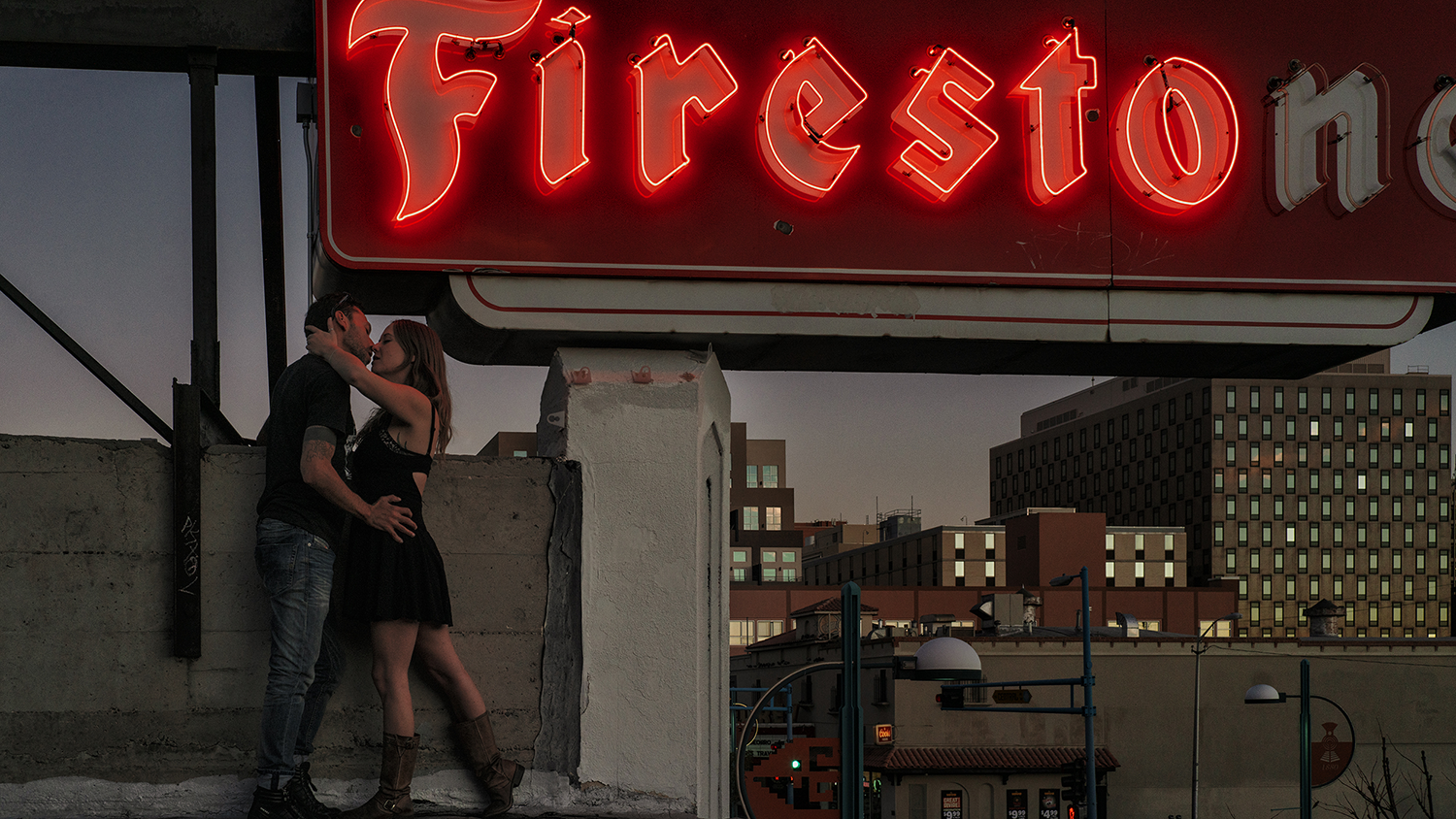
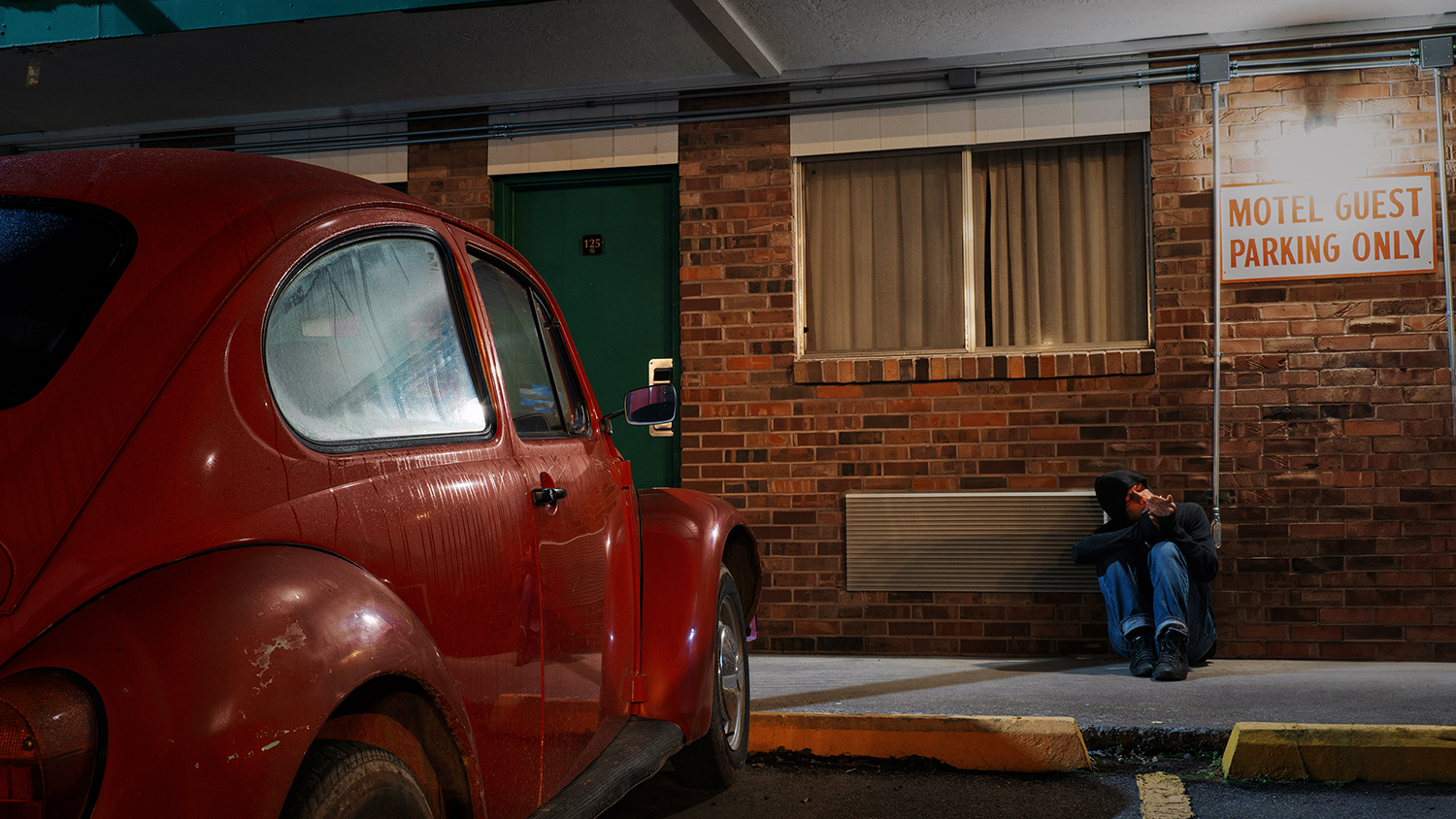
Each photograph in Liminal Spaces captures the moment when silence sharpens into awareness — when crumbling infrastructure, empty parking lots, and fading signage reveal not decay, but insight. The desert ruins aren’t just relics of a past era; they are reminders that the American story has always been written on fragile materials: hope, ambition, exhaustion, reinvention.
In the desert, ruin and revelation sit side by side.
A broken diner sign flickers with the same electricity as longing.
A stretch of empty two-lane feels like both exile and invitation.
A motel room, half-lit, becomes a confessional for the nation’s private uncertainties.
The epiphany here isn’t a solution. It’s an understanding:
what falls apart also clarifies what remains.
Why the Desert Still Matters
The desert is often described as barren, but that isn’t true. It holds more than it reveals. And what it holds most powerfully is perspective.
When you stand alone in the desert, you can feel how small a single life is against the sweep of time — but also how significant it becomes when seen without distraction. Cities compress us into narrow narratives; the desert stretches us back out. We remember that progress is not linear. That civilizations rise and recede. That the stories we live inside are malleable, and must be rewritten every generation.
The desert epiphany is simple:
Nothing is guaranteed, and yet everything is possible.
The future is not promised, but it isn’t lost.
The road is empty, but still open.
A Quiet Turning in the Light
At the end of Liminal Spaces, after all the dusk-lit rooms and abandoned structures, there is a soft shift — a moment where the palette brightens, where one character sits in a sanctuary of colored light. Nothing is explained. Nothing is resolved. The desert doesn’t suddenly bloom into clarity.
And yet something has changed.
The epiphany is not triumph or closure — it is recognition. A small, steady reminder that even after the darkest stretches of road, there is a point where the light begins to move differently, gathering itself on the edges of things, offering no promises but extending its hand all the same.
The desert never tells us what comes next.
It only reminds us that something does.
And that reminder, in times like these, is enough.