A Liminal Spaces Reflection
Every country lives inside a story about itself.
America’s story — the one stitched into textbooks, monuments, and half-remembered highway ballads — has always moved in one direction: West.
Westward expansion.
Westward promise.
Westward escape.
The horizon was the compass, and the compass always pointed toward something better, even if no one could quite articulate what “better” meant. It was a story powered by motion, by belief, by a faith that the land ahead would redeem whatever had been left behind.
But in recent years — and especially in the strange stillness of 2020 — that story began to feel different, as though someone had pressed their thumb against the reel of American myth and gently wound it backward.
The country did not collapse.
It simply began to rewatch itself.
The West Was Never About Geography
When the early dreamers pushed toward the frontier, they weren’t just chasing land. They were chasing a version of themselves made possible only by distance — distance from the past, from constraint, from whatever stories once held them in place.
The West was a direction, yes.
But more importantly, it was an idea:
That a better self existed somewhere just beyond the last ridge.
For generations, this belief shaped the American psyche. People moved because movement felt synonymous with progress. Highways became lifelines. Gas stations became chapels. The desert became a blank page on which anything might be written.
But myths age, just as people do.
And when a myth reaches the end of its loop, it often returns to its beginning — not in triumph, but in reconsideration.
The Modern Rewind
In the post-2020 atmosphere, something subtle but unmistakable happened: the West no longer felt like a promise. It felt like an echo.
A once-expanding sense of possibility began folding inward.
Dreams that once stretched across miles began circling back toward the self.
The horizon remained open, yet strangely distant — familiar, but hollowed out.
The road trip, once a rite of freedom, started to resemble introspection. Instead of fleeing the past, people found themselves driving through it. Ghost towns felt less like failures of industry and more like monuments to earlier ambitions. Ruins read like annotations. Signs flickered like questions.
The country was not moving backward.
It was simply waking up to the fact that forward had changed meaning.
In that awakening, the American myth began to rewind.
Why a Rewind Is Not a Retreat
Rewinding is not the same as reversing.
It is a kind of recognition — a chance to re-examine what once felt unquestionable.
In Liminal Spaces, crumbling buildings and abandoned roads do not condemn the American Dream. They expose its scaffolding. They show the seams of a narrative that was always more fragile, more improvisational, more dreamlike than we pretended.
The rewind reveals:
- the cost of perpetual forward motion,
- the weight of the stories we inherited,
- the gap between national myth and personal experience,
- the beauty that persists even after purpose dissolves.
The West, in your imagery, becomes not a frontier but a mirror — reflecting a nation caught between who it believed it was and who it is becoming.
The Couple as Echoes of the Myth
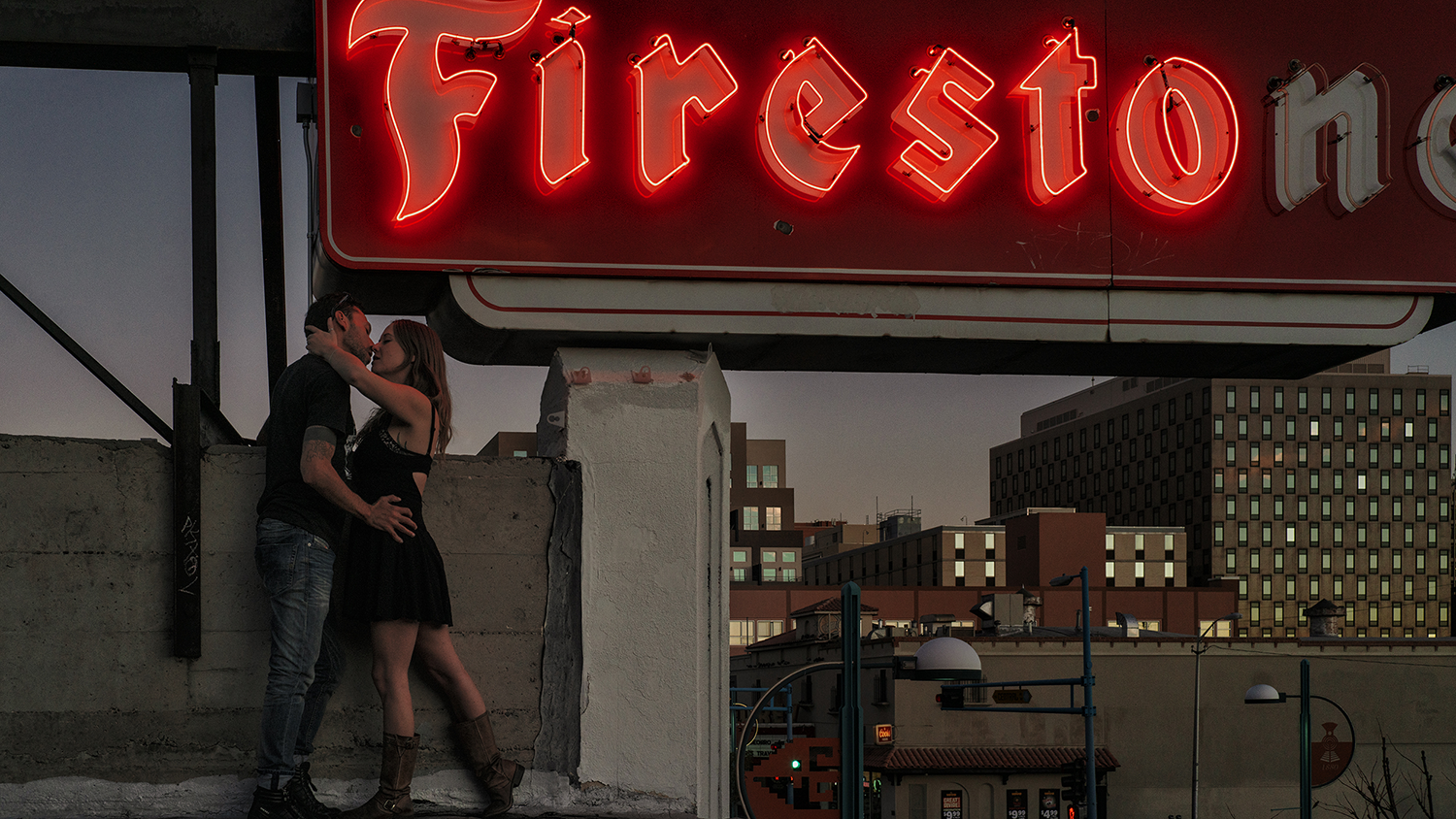
Your wandering figures embody this rewind perfectly.
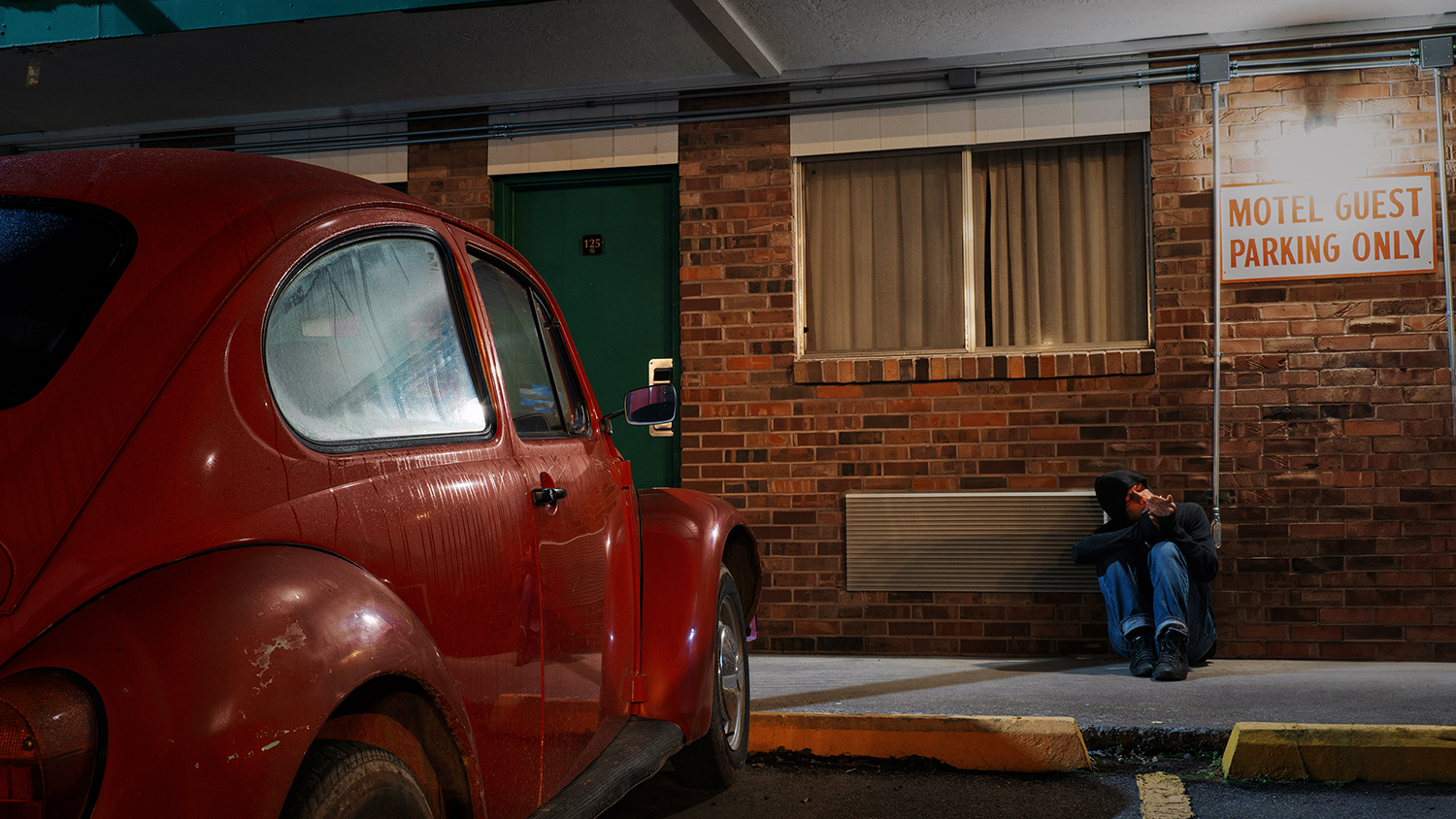
They move through landscapes once framed as thresholds to a better life — motels, highways, mesas, the vast desert night — but their journey doesn’t unfold the way the old mythology promised. There is no triumphant arrival, no conquering of land, no revelation waiting atop the next hill.
Instead, they wander with a quiet awareness that the horizon is no longer destiny but context — a backdrop against which they must understand themselves.
Their movement is not conquest.
It is contemplation.
Not Manifest Destiny, but Manifest Recognition.
The myth has turned inward.
The Quiet Gift of Retrospection
When a story rewinds, it allows something rare:
the chance to see familiar scenes with new eyes.
In the American context, that means recognizing:
- the illusions that once fueled us,
- the truths we overlooked,
- the strengths that remained invisible under momentum,
- the fragility built into our foundations.
The Liminal Spaces desert is not a lament for what was lost. It is a meditation on what remains — and what can now be rewritten.
A Myth Facing Its Own Reflection
Every myth reaches a point where its symbols stop functioning the way they used to. Trails close. Dreams change shape. Horizons shift tone. When that happens, the myth doesn’t vanish — it transforms.
The American myth, in rewind, reveals a tenderness beneath the bravado, a searching beneath the certainty, a desire to begin again without pretending the past was easier than it was.
This is not the end of the story.
It is the moment just before a new one is told.
The desert, in its vast silence, offers what myths rarely do:
room.
Room to reconsider.
Room to breathe.
Room to admit that destiny was always a metaphor — and that metaphors can evolve.
What Comes After the Rewind
Your final image — softened, luminous, unmistakably hopeful — marks not a conclusion but a rotation. The myth circles back to its core: not expansion, not conquest, not movement for its own sake, but the possibility of renewal.
Hope, in your series, doesn’t arrive as closure.
It arrives as orientation.
A quiet sense that the road may yet lead somewhere meaningful, even if the mythology that once guided it has dissolved.
The American story is not ending.
It is simply catching up to itself.
For the first time in a long time, the country is not racing toward the horizon.
It is listening to the echo of its own footsteps —
and preparing, at last,
to choose a new direction.