A Liminal Spaces Reflection
There is a moment on every desert drive when the world stops feeling like scenery and starts feeling like memory — as though the air itself is holding something it wants you to understand. It is never a loud revelation. The desert doesn’t speak that way. Instead, it waits until you’ve shed enough noise, until the last signal bar vanishes and the strip malls dissolve behind you. Only then does it begin.
The desert teaches through subtraction.
No skyscrapers.
No crowds.
No distractions dense enough to outrun your own thoughts.
At first, the emptiness feels unsettling, like the country misplaced its script and hasn’t yet realized it. But the longer you stand in that void, the more you realize the absence is not emptiness — it’s clarity. The silence doesn’t just surround you; it uncovers the background hum you’ve carried inside.
This is where the epiphany lives.
The West as a Mirror
For generations, the American West has been cast as the place where reinvention happens — a horizon without edges, a promise without expiration. But beneath that mythology lies a quieter truth: the West forces you to confront who you are when everything familiar falls away.
Stand in the desert long enough and you learn it’s not barren; it’s reflective.
Anxiety stretches across the sand.
Longing settles along the ridgelines.
Hope shimmers across the heat like an apparition just out of reach.
Even the past — no matter how far behind you think it is — rises again on the horizon in a new shape.
The desert isn’t neutral.
It’s honest.
And honesty, when delivered without cushioning, feels like revelation.
A Country Caught in Stillness
Something shifted around 2020 — a year when the world slowed down, willingly or not. Momentum evaporated. Patterns fractured. And in that unplanned stillness, America found itself staring at its own reflection much like a traveler stranded in the desert with no noise left to hide behind.
The desert in Liminal Spaces becomes a stand-in for this collective pause — a geography that mirrors the emotional state of a country suddenly forced to see itself without filters. Roads stretched out but led nowhere familiar. Structures stood but felt unmoored from the narratives that once justified them. Distance became the new currency: between people, between beliefs, between what we dreamed of and what reality allowed.
And through that stillness came an epiphany:
We had mistaken movement for progress.
We had mistaken noise for connection.
We had mistaken certainty for truth.
The desert reveals the seams in the stories we built.
Light, Ruin, and the Unsaid
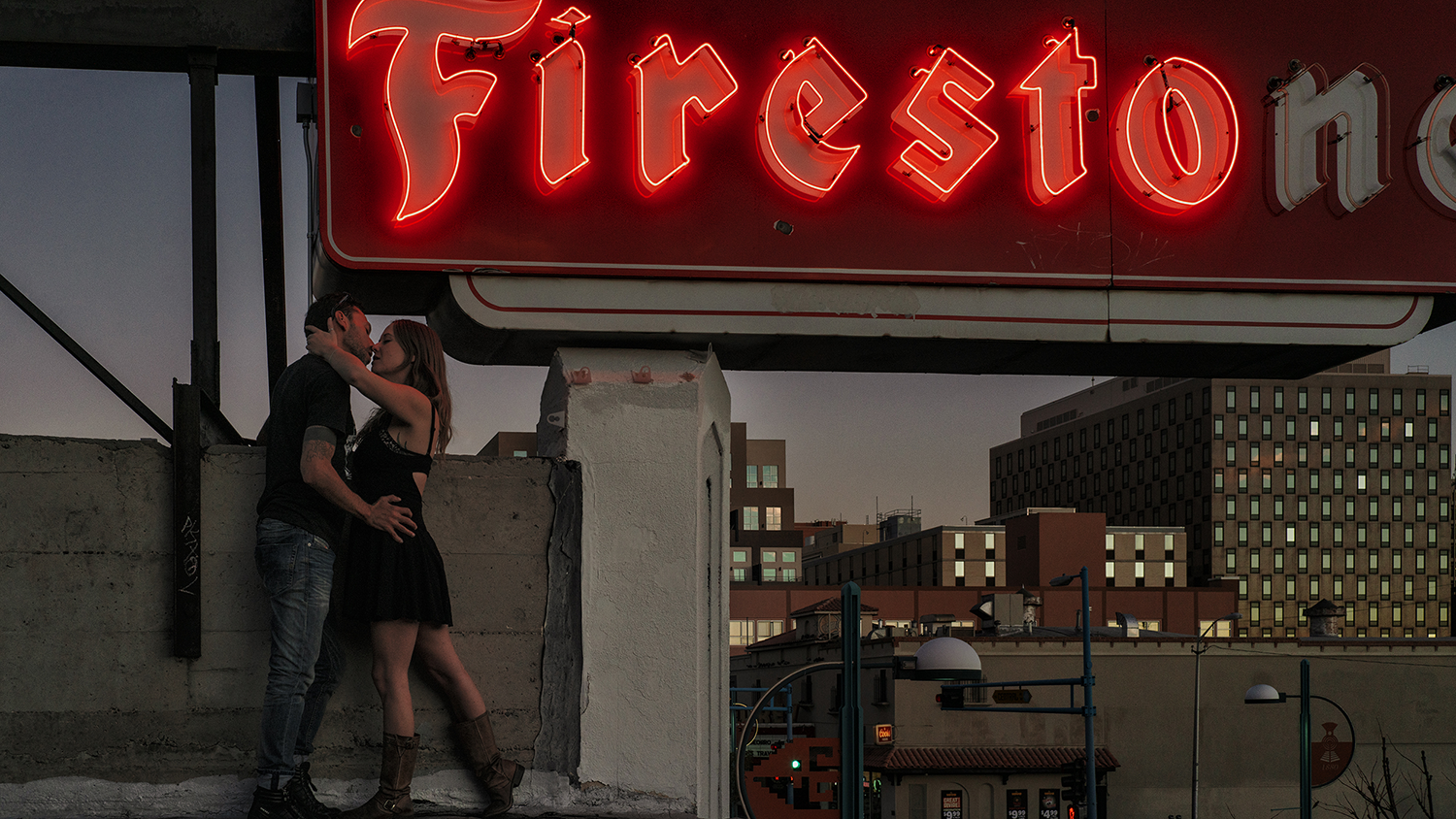
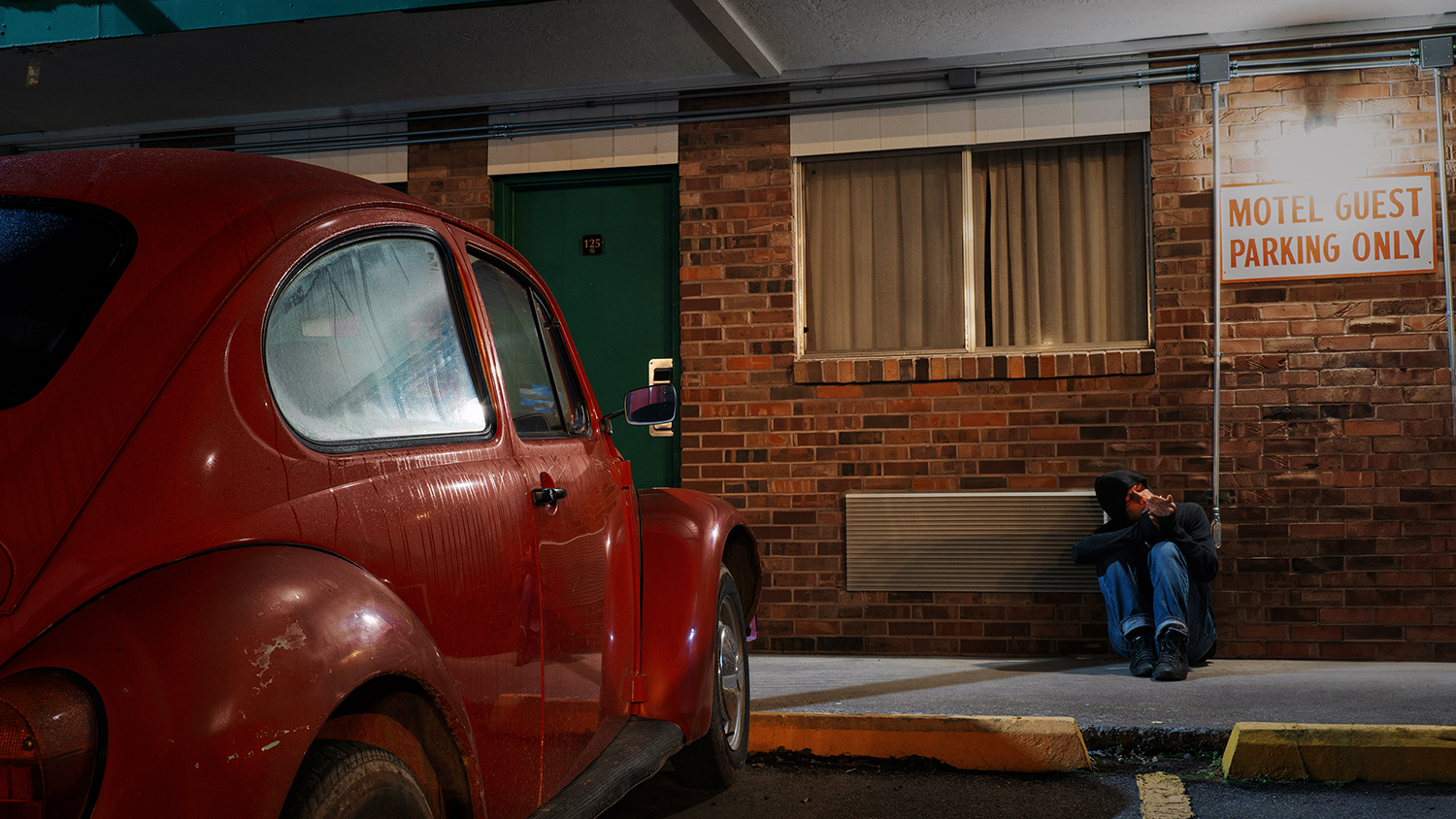
Each image in Liminal Spaces captures the moment when silence sharpens into awareness — when a crumbling sign or empty parking lot stops looking like decay and instead becomes a kind of insight. The ruins of the West aren’t just artifacts of another era; they are reminders that the American story has always been carved into fragile material: ambition, fatigue, reinvention, contradiction.
In the desert, ruin and revelation coexist.
A gutted diner sign carries the same electricity as longing.
A deserted two-lane road feels like both abandonment and invitation.
A half-lit motel room becomes a confessional for unspoken anxieties.
The epiphany is not an answer.
It’s a recognition:
what collapses also clarifies.
The Desert’s Lesson
People often call the desert empty. It’s not. It holds more than it reveals. And what it holds most powerfully is perspective.
In the desert, you feel how small a single life becomes against the sweep of time — and how significant it becomes when stripped of distraction. Cities compress identities; the desert lets them breathe. Progress proves itself nonlinear. Civilizations rise and recede. Futures shift without notice.
The desert epiphany is simple and humbling:
Nothing is guaranteed, and yet everything is possible.
The future is unpredictable, but never absent.
The road is empty, but open.
A Quiet Turning
At the end of Liminal Spaces, after all the dusk-lit rooms and abandoned structures, the palette shifts. Light returns. It moves differently. It settles softly on a figure in a sanctum of stained glass — not as resolution, not as closure, but as a quiet rearrangement of the emotional weight.
The desert doesn’t suddenly offer clarity.
It offers orientation.
A reminder that even after the darkest stretch of highway, there comes a moment — subtle, fleeting — when the light begins to gather on the edges of things, hinting at a new direction without spelling it out.
The desert never tells us what comes next.
It only tells us that something does.
And in times like these, that is enough.